Kit vs beehiiv: Which Email Platform Should You Use?
Kit vs beehiiv compared for creators: free plans, paid newsletter fees, automation depth, growth tools, and which one fits how you actually make money.
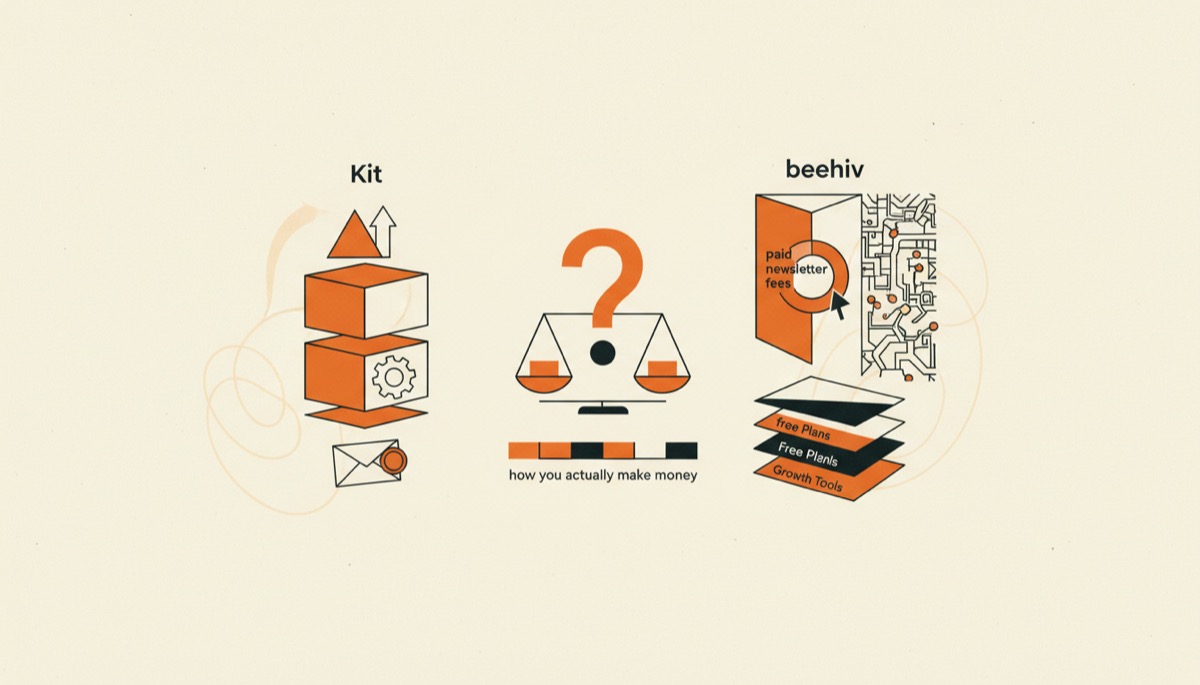
Kit vs beehiiv comes down to one question: are you running a business that emails, or a newsletter that is the business? Kit is email marketing for creators who sell things — courses, templates, coaching. beehiiv is a publishing platform for people whose product is the newsletter itself.
Bottom line:
- Pick Kit if email is the engine behind a course, template shop, or service business and you need real automation, tagging, and segmentation.
- Pick beehiiv if you are building a media property and want paid subscriptions, an ad network, referral growth, and a website that comes with it.
- Both have genuinely usable free tiers, so you can test the one you lean toward before paying anything.
Kit vs beehiiv at a glance
| Kit | beehiiv | |
|---|---|---|
| Pricing model | Free Newsletter plan, then paid tiers that scale with subscriber count | Free Launch plan, then Scale and Max tiers that scale with subscriber count |
| Free plan | Generous subscriber ceiling (commonly cited around 10,000) but limited to roughly one form, one landing page, one automation, with Kit branding | Free up to roughly 2,500 subscribers with most publishing features intact |
| Entry paid tier | Starts around $29–$39/month at 1,000 subscribers depending on billing cycle | Starts around $43–$49/month at 1,000 subscribers depending on billing cycle |
| Best for | Creators selling digital products, courses, coaching | Newsletter operators monetizing via subscriptions, sponsors, referrals |
| Paid subscription fees | A platform commerce fee on product and subscription sales, plus processor fees | 0% platform cut on paid subscriptions; you still pay Stripe processing |
| Standout feature | Visual automations plus tag-based segmentation that actually holds up at scale | Ad network, referral program, boosts, and a built-in publication website |
| Weakest point | Free plan is deliberately crippled on automation; price jumped noticeably in recent cycles | Automation and segmentation are thinner than a dedicated ESP |
Prices move. Treat the numbers above as the shape of the market, not a quote — confirm on the Kit pricing page and the beehiiv pricing page before you commit.
The real difference: list logic vs publication logic
Kit thinks in subscribers with attributes. Someone joins from a lead magnet, gets tagged, enters a sequence, buys a product, gets tagged again, and drops out of the promo sequence automatically. That tag-and-branch model is what you need when you sell more than one thing to overlapping audiences.
beehiiv thinks in publications with readers. Your newsletter is an object with a homepage, an archive, an SEO-indexed post for every issue, subscriber tiers, and a paywall. Segmentation exists, but it is in service of publishing, not funnel building.
That distinction predicts almost every complaint people have about the wrong choice. Course sellers on beehiiv find themselves rebuilding automation logic by hand. Newsletter operators on Kit end up paying for a separate website, a separate paywall, and a separate referral tool.
Free plans: what you actually get
Kit’s free Newsletter plan carries a high subscriber ceiling — the widely published figure is 10,000 — with unlimited sends. The catch is the feature gate: roughly one form, one landing page, one automation, Kit branding on emails, and no third-party integrations. It is enough to build a list. It is not enough to run a launch.
beehiiv’s free Launch plan caps you lower on subscribers (around 2,500) but leaves more of the actual product intact. You can publish, you get the website, you get the basic analytics. Monetization features — paid subscriptions, the ad network, the deeper automation — sit behind Scale.
So the free tiers fail in opposite directions. Kit gives you room and takes away tools. beehiiv gives you tools and takes away room.
Practical read: if you are pre-launch and collecting emails with one opt-in, Kit’s free plan costs you nothing for a long time. If you are publishing weekly and want the thing to look like a real publication from issue one, start on beehiiv’s free plan instead.
Monetization: where the money difference shows up
If you charge for the newsletter, beehiiv’s economics are cleaner. beehiiv does not take a platform cut of paid subscription revenue — you pay Stripe’s standard processing (commonly 2.9% + $0.30) and that is it. Kit’s commerce layer charges a platform fee on product and subscription sales on top of processing. On a $10/month paid newsletter with a few hundred subscribers that gap is small. At a few thousand it is a line item you will notice.
beehiiv also ships three growth-and-revenue mechanics Kit does not natively match:
- Ad network — beehiiv brokers sponsor placements and matches advertisers to publications by size and niche. For a newsletter that is not yet big enough to sell direct sponsorships, this is real revenue.
- Boosts — you get paid to recommend other newsletters, or pay to be recommended. It is a marketplace for subscriber acquisition with a price attached.
- Referral program — native reward tiers (“refer 3 friends, get the template pack”) without bolting on a third-party tool.
Kit’s monetization answer is different in kind: sell your own products. Kit Commerce handles digital product checkout, tip jars, and paid recommendations, and Kit’s Creator Network lets other creators recommend you at signup. It is fine, and if your revenue comes from a $297 course rather than a $9/month subscription, Kit’s automation matters far more than beehiiv’s ad marketplace.
Automation and segmentation
This is Kit’s home turf and it is not close.
Kit gives you a visual automation builder with branching logic, event triggers, tags, custom fields, and link triggers. You can run a real evergreen funnel: opt-in, nurture, pitch, tag buyers, suppress buyers from the pitch, move non-buyers to a lower-intensity sequence. If you sell more than one product, or you run launches, you will use all of it.
beehiiv’s automations cover the common cases — welcome series, tag on signup, segment by engagement — and they have improved a lot. But complex branching, deep tag arithmetic, and multi-product suppression logic are harder to express. If your sales process has more than two forks, you will feel the ceiling.
Deliverability on both is good. Neither platform is the reason your emails land in spam; your list hygiene and sending habits are.
Who should pick Kit
Pick Kit if any of these describe you:
- You sell a course, template pack, cohort, or coaching offer, and email is how you sell it.
- You run launches with segmentation — different emails to openers, clickers, cart abandoners, past buyers.
- You already sell on a course platform (see our course platform comparison) and need an ESP that integrates cleanly rather than a competing publishing stack.
- You want a free plan that scales to a big list while you build the product.
Kit’s whole design assumes the newsletter is marketing for something else. If that is true for you, its automation depth pays for the higher price of admission.
Who should pick beehiiv
Pick beehiiv if:
- The newsletter is the product, or you want it to be.
- You plan to charge for a premium tier and want to keep the full subscription price minus processing.
- You want sponsor revenue before you are big enough to sell sponsorships yourself.
- You want a website, archive, SEO pages, and referral mechanics without assembling them.
- Growth via recommendations and boosts appeals more to you than funnel engineering.
beehiiv is what you use when you are building a media asset. The publishing surface is better, the growth tooling is better, and the monetization math on subscriptions is better.
Can you use both?
Some people do, and it usually means paying twice for overlapping capability. The honest version of “use both” is: run the publication on beehiiv, run product launch sequences on a platform built for it. Before you go there, ask whether one tool at the next tier up solves it. Two subscriptions to save one workflow is rarely the right trade at small scale.
If you are genuinely torn, the cheap test is to build the same welcome sequence on both free plans in an afternoon. Whichever one stops annoying you first is your answer.
FAQ
Is beehiiv cheaper than Kit?
At the same subscriber count the entry paid tiers land in a similar range, with Kit’s Creator tier and beehiiv’s Scale tier both starting in the $29–$49/month neighborhood depending on billing cycle. The bigger cost difference is monetization: beehiiv takes no platform cut on paid subscriptions, Kit charges a commerce fee on sales. Check both current pricing pages, because both have raised prices.
Can I move my list from Kit to beehiiv, or the other way?
Yes. Both support CSV import and export of subscribers with tags or custom fields. What does not transfer cleanly is automation logic, forms, and landing pages — you rebuild those. Migrate before your sequences get complicated, not after.
Which one is better for selling an online course?
Kit, in most cases. Course selling depends on segmentation, buyer tagging, and launch sequences, which is exactly what Kit’s automation builder is for. If you are still choosing where to host the course itself, start with how to start selling online courses.
Does beehiiv replace my website?
For a newsletter-first business, largely yes — you get a hosted publication with an archive, custom domain support, and indexable post pages. For a business selling multiple products with sales pages, no. You will still want a proper site or a platform that handles checkout and delivery.
Which one to start with today
If you are building an audience to sell something, start with Kit — the free Newsletter plan gets you a long way, and the automation you will eventually need is already there when you upgrade.
If the newsletter is the business, start with beehiiv. The free Launch plan gives you a real publication, and the monetization path — paid tiers, sponsors, referrals — is built in rather than bolted on.
Either way, pick one and send the first issue this week. The platform is not what is slowing you down.
Tools mentioned in this article
Kit (formerly ConvertKit)
Email marketing built for creators
email newslettersTry Kit (formerly ConvertKit)Keep reading
beehiiv Review: The Best Platform for Paid Newsletters
An honest beehiiv review for US creators: the free plan, the ad network, boosts, 0% on paid subs, and the places beehiiv still falls short.
Best Newsletter Platforms for Creators, Compared
The best newsletter platforms picked by use case: free start, paid subscriptions, selling products, and scaling a list without wrecking your margins.
How to Start a Paid Newsletter (Step-by-Step Guide)
How to start a paid newsletter: pick a niche people pay for, choose a platform, set pricing, find your first 100 readers, and convert them to paid.
Kit Review: The Email Tool Built for Selling Things
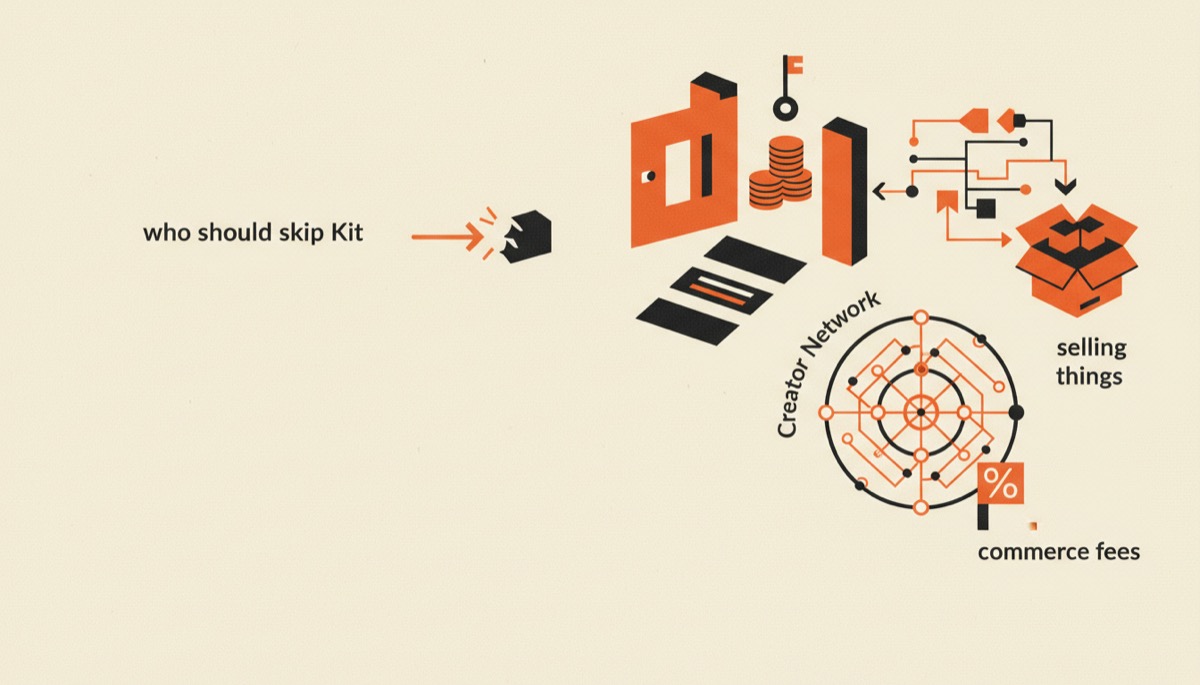
An honest Kit review for creators: the 10k free plan and its gates, visual automations, the Creator Network, commerce fees, and who should skip Kit.